

🔥 IRAN vs ISRAEL WAR 2026: Middle East on the Brink as Conflict Explodes into Global Crisis
The world is watching in shock as the Iran–Israel war of 2026 rapidly escalates into one of the most dangerous geopolitical crises of the 21st century. What began as targeted military strikes has now turned into a full-scale regional conflict involving multiple countries, devastating infrastructure, and rising global panic over energy supplies, economic stability, and the looming threat of a wider war.
⚡ How the War Started
The conflict officially erupted on February 28, 2026, when the United States and Israel launched a massive coordinated military operation against Iran, known as Operation Lion’s Roar. The strikes targeted Iranian military bases, missile systems, and high-ranking leadership.
Within hours, the situation escalated dramatically. Hundreds of strikes hit major cities across Iran, including Tehran. One of the most shocking developments was the assassination of Iran’s Supreme Leader, Ali Khamenei, in the initial wave of attacks.
This unprecedented move sent shockwaves across the globe and triggered immediate retaliation from Iran.
💣 Retaliation and Missile Strikes
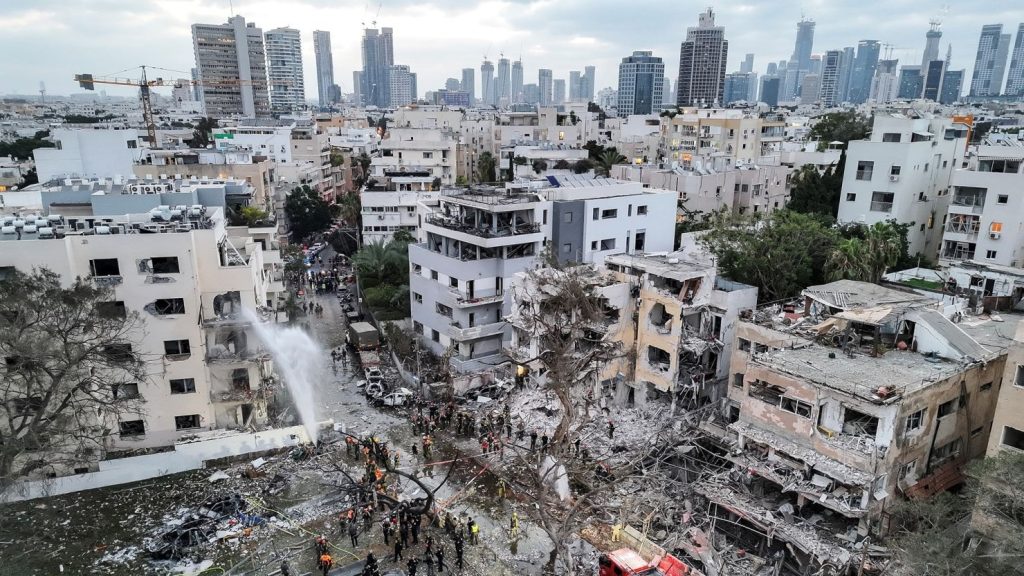
Iran responded with a barrage of missile and drone attacks targeting Israel. Cities across Israel were placed under emergency alert as sirens blared and civilians rushed into shelters. Despite Israel’s advanced missile defense systems, several strikes caused casualties and widespread destruction.
The war quickly spread beyond the two countries. Iran launched attacks on strategic targets across the Middle East, including oil facilities and military bases in the Gulf region. Explosions were reported in multiple countries, raising fears that the conflict could spiral into a broader regional war.
🛢️ Energy War: The Real Global Threat
One of the most dangerous aspects of this war is its impact on global energy infrastructure.
Israel launched a major attack on Iran’s South Pars gas field, the largest natural gas reserve in the world. This facility produces up to 70–75% of Iran’s gas supply, making it critical for the country’s economy and daily life.
The damage caused by these strikes disrupted gas production and forced Iran to halt exports to neighboring countries. In response, Iran targeted oil refineries and energy hubs across the Gulf.
The result? Global oil prices surged to nearly $119 per barrel, and analysts warn prices could rise even further if the conflict continues.
Gas prices have also skyrocketed, with some regions experiencing a doubling of costs. This has triggered fears of worldwide inflation, economic instability, and supply chain disruptions.
🏙️ Civilian Impact and Rising Death Toll
As the war intensifies, civilians are paying the highest price.
Reports indicate that more than 1,300 Iranians and over 1,000 Lebanese have already been killed, along with casualties in Israel and among U.S. forces.
Entire neighborhoods have been destroyed, and millions of people are living under constant threat of airstrikes. In Iran, authorities have launched a massive internal crackdown, arresting dozens accused of collaborating with Israel amid fears of espionage and unrest.
Hospitals are overwhelmed, infrastructure is collapsing, and humanitarian concerns are growing rapidly.
🧠 Leadership Crisis in Iran
The assassination of key Iranian leaders has created a major power vacuum.
Following the death of Ali Khamenei, his successor, Mojtaba Khamenei, took power amid chaos and uncertainty. Meanwhile, other high-ranking officials have also been targeted and killed in precision strikes, including Ali Larijani, a top national security figure.
These attacks are part of a broader strategy aimed at destabilizing Iran’s leadership and weakening its military capabilities.
🌍 Regional War Expands
The conflict is no longer limited to Iran and Israel.
Iran has launched attacks on multiple countries in the Gulf, including Saudi Arabia, Kuwait, and the UAE, targeting oil facilities and critical infrastructure.
At the same time, tensions with neighboring countries are rising, and several nations have increased military readiness. Some countries have even arrested individuals linked to Iran-backed groups, signaling the spread of the conflict beyond traditional battlefields.
📉 Global Economic Shockwaves
The Iran–Israel war is not just a regional issue—it is a global crisis.
Stock markets across Asia, Europe, and the United States have fallen sharply as investors react to the uncertainty. Energy companies are reporting disruptions, and airlines are warning of rising ticket prices due to increased fuel costs.
Economists fear that if the conflict continues, it could trigger a global recession.
The Strait of Hormuz, one of the world’s most important oil shipping routes, is now under threat. Any disruption here could cripple global energy supply chains and push prices to record highs.
🚨 Could This Become World War 3?
This is the question everyone is asking.
With the United States already involved and multiple countries being pulled into the conflict, the risk of a larger war is very real. Military alliances are being tested, and global powers are watching closely.
Experts warn that if the conflict continues to escalate, it could lead to direct confrontations between major world powers—something the world has not seen in decades.
🔮 What Happens Next?
At this stage, the war shows no signs of slowing down.
Israel has indicated that its operations may continue for weeks, targeting Iran’s military and nuclear capabilities. Iran, on the other hand, has vowed to continue its retaliation and expand its attacks if necessary.
Diplomatic efforts to de-escalate the situation have so far failed, and tensions remain at an all-time high.
About the Author



Ab ki Bar Balen Sarkar |